
Your Industrial Compressor Spare Parts Guide
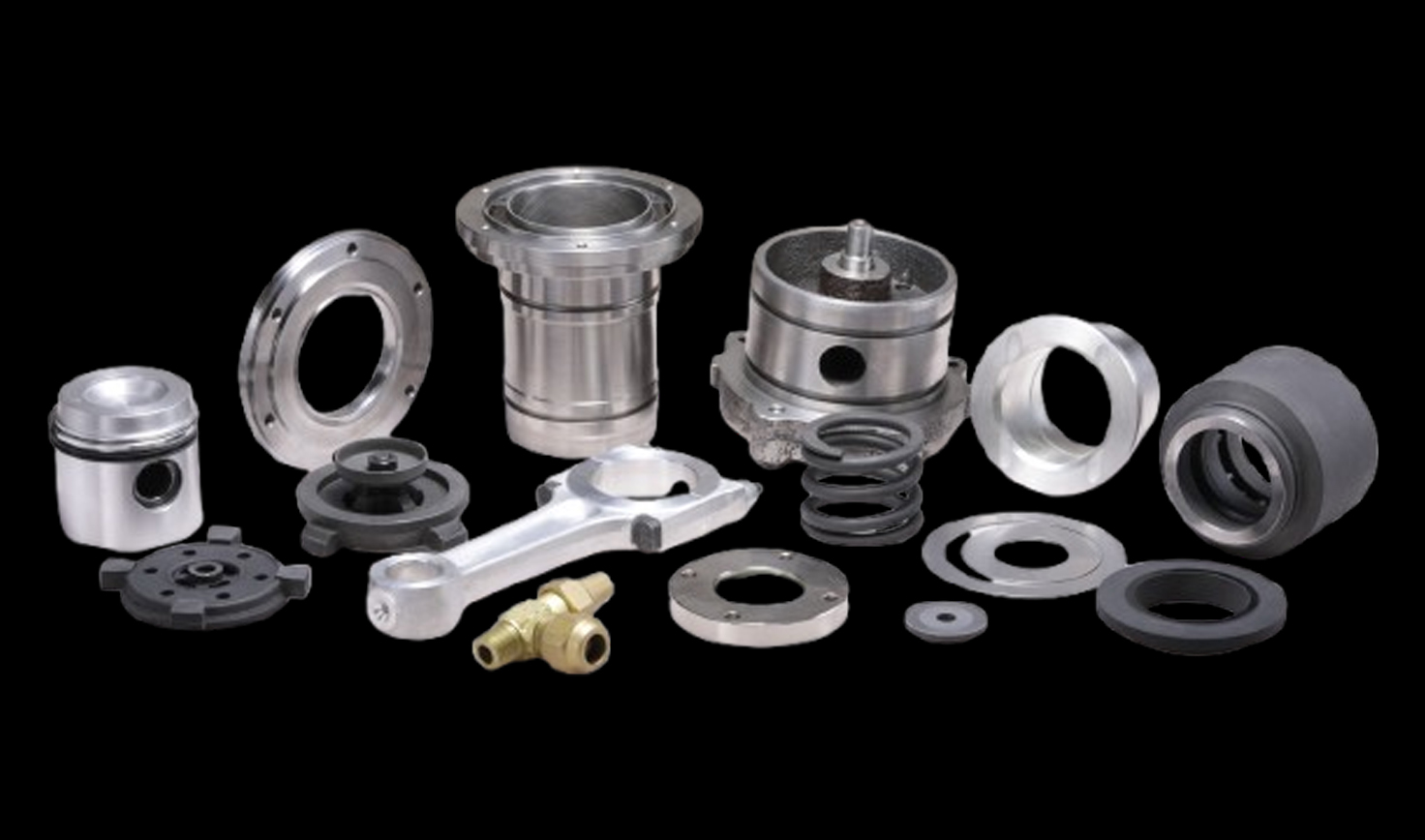
Industrial compressor spare parts are very important to assist in production or manufacturing processes. However, compressors’ optimal performance highly relies not only on regular maintenance but also on the type of spare parts used. Be it minor wear and tear or major repair tasks, the choice of suitable components is crucial.
This blog will take you through an understanding and choice of the best spare parts that will help extend the life and efficiency of your industrial compressor. Here’s what you need to know:
- The importance of regular servicing
- Various causes can be attributed to damage.
- Installation of high-quality spare parts during repair and maintenance.
If you use the right method of approach to maintain them, it ensures your compressor is at its optimum, translating to continuous operations within your facility.
Understanding Your Industrial Compressor
Industrial compressors play a vital role in everything, from pneumatic tool driveability to cooling principles in refrigeration. The efficiency and durability of an industrial compressor rest implicitly upon the proper identification of the type of compressor and its particular needs. Knowledge of these elements will help you not only in performing maintenance efficiently but also in choosing the correct replacement parts.
Compressor Types and Their Particular Requirements
Normally, the basis for the classification of industrial compressors is physical design and the operating mechanism. The major types include:
Reciprocating Compressors:
These types of compressors have pistons driven by a crankshaft that provide high-pressure air. They work wonders in high-pressure applications and hence find great application in maintenance facilities and construction sites. In terms of spare parts, there are things to consider, like pistons, rings, and crankshafts that need periodic inspection and replacement.
Rotary Screw Compressors:
Made up of two rotors having intermeshing helical screws. They find their application where smooth and continuous operation is required, and they are pretty common in factories and big production lines. Some of the key consumables that are in demand for rotary screw compressors include rotor blades, seals, and bearings.
Centrifugal Compressors:
Mainly used for large-scale industries. They work by using dynamic processes; therefore, they are effective for compressing air volumes in large quantities. Some of the general spare parts that are in demand are rotor assemblies, impellers, and diffusers.
Understanding the type of requirement for your compressor is vital in offering the best maintenance practices. Each variant type defines its characteristics and demand for operation; hence, the right selection of spare parts must correspond to such demand to retain optimal performance.
Common Industrial Compressor Spare Parts
Whatever the type may be, a number of common components are essential to carry out the operation of industrial compressors. Familiarization with the components discussed below will facilitate preventive maintenance and troubleshooting effectively:
Filters:
These are quite important in that they help save the compressor from possible contaminants that could otherwise result in inefficiency or complete failure. For this reason, replacing the intake filters, oil filters, and air/oil separator every now and then ensures there is good air purity and maintains system integrity.
Valves:
An important concern for any compressor. Its general efficiency depends mainly on its suction and discharge valves, because these valves control the passage of air inside the tank and must be tuned to avoid any leakage that may cause loss of energy.
Gaskets and Seals:
These are used to prevent leakages of fluids and gases and to maintain pressure correctly. They wear down and have to be replaced at timely intervals so that operations may remain uninterrupted.
Connectors and Hoses:
These degrade or get damaged over time. Only the best quality replacements, ensuring reliability and safety, must be chosen.
By knowing some of these common parts and their functions, you’re able to adopt some form of proactive maintenance procedure, therefore improving both the lifetime and efficiency of your compressor.
Key Issues in the Selection of Spare Parts
Choosing the proper spare parts for an industrial compressor is all about investing in efficiency and service life, as it requires consideration of a number of factors to get optimal results.
Compatibility with Your Compressor Model
Compatibility with your compressor model is the most important factor in the choice of spare parts. Improper part compatibility may bring dire mechanical issues, cause low efficiency, and perhaps invalidate any warranties. Here’s how you can ensure compatibility:
Check Manufacturer’s Specifications: These outline all the specifications and recommended parts for each model. By following such, you are guaranteed to choose parts that actually fit and function precisely.
OEM Parts: These parts are manufactured for your model of compressor and will fit and work appropriately. Although OEM parts are pricier at times compared to other kinds of aftermarket parts, they can provide you with peace of mind regarding compatibility.
You may obtain more detailed information about your model of compressor from model plates, which are usually fixed on the machine, or from the technical manuals accompanying it.
Cost-Effectiveness Analysis
Whereas spare parts are to be purchased, one may be tempted to go for the cheapest available. This and more have to be balanced with cost-effectiveness considerations. Here’s how to judge this aspect:
Initial and Long-term Costs: Besides the initial cost of purchasing the part, consider the likely extra costs that may be incurred in frequent replacements or repairs if the part were to be of a low-quality type.
Energy Efficiency Impact: Some spare parts of a compressor can influence its energy efficiency. Spending a little more on energy-efficient parts may result in huge savings on the operating cost over time.
Downtime Mitigation: Using high-quality parts that boast high reliability and provide fewer on-site/operational releases comes with a higher initial cost. These costs can, however, be offset by lesser downtimes and reduced maintenance the service may require, mostly proving cost-effective.
As with any quantity purchase, negotiate a bulk purchase or partnership benefits with your suppliers. Normally, long-term partnerships carry discounts and assure continuity of supply, adding to overall cost-effectiveness.
Therefore, choosing the proper spare parts for your industrial compressor is a really multi-dimensional decision that has to consider compatibility, quality, dependability, and affordability. It would not only help safeguard the efficiency of your compressor but also provide a way through which operation shall become more stable and fiscally prudent.
Sourcing Spare Parts
Where an industrial compressor is concerned, locating the correct spares is paramount. The selection of good parts impacts performance and durability. Understanding where to source these parts and the options available will bring ease into the process of maintenance and minimize any resultant periods of downtime.
OEM vs. Aftermarket: Pros and Cons
The decision of opting between an OEM part and an aftermarket part is quite tricky. Each of them has its share of advantages and disadvantages.
OEM Parts:
Pros:
- Exact Fit and Specification: OEM parts are built to match your compressor’s original components, hence ensuring an exact fit.
- Warranty Assurance: Most of these parts have a warranty that includes assurance of good quality and satisfactory performance.
- Reliability: Affordable spare parts with strong construction that retain most of the original factory specifications.
Cons:
- Higher Price: Mostly more costlier than those from aftermarkets.
- Availability: Some may be difficult to get, depending on the availability given by various manufacturers.
Aftermarket parts:
Pros:
- Cost-effective: Generally speaking, this would make it cheaper, therefore being the more affordable option.
- Wider Availability: Several-fold more available, with wider sourcing opportunities.
Cons:
- Quality-Variable: The quality can be premium or inferior; some selection is necessary.
- No Warranty: Some OEM parts do not come with any solid kind of warranty.
Basically, OEM versus Aftermarket will depend upon one’s budget, availability, and the needs of the equipment.
Vendors and Suppliers you can trust
Exercising due diligence in the process of acquiring spare parts requires paying attention to the process of identifying trusted suppliers and vendors. A few tips will be highlighted here that ensure you deal with credible sources:
- Research and Reviews: Study the reputation through research and reviews made by consumers of the potential suppliers. Also, check for feedback on the quality of the products, customer service, and reliability.
- Industry Associations: Where possible, seek out those suppliers who are either part of renowned industry associations or accredited by recognized accreditation organizations to ensure credibility.
- Experience: The tendency will definitely be to prefer those suppliers with long years of experience in the same field. Long-standing business most often means a much better understanding of market needs and, therefore, product quality. A good deal with a reliable supplier can translate to easier maintenance and less operational downtime.
- Originality Check and Guarantee: When purchasing spare parts, authenticity and warranty conditions are important to note.
Here is how you can do it:
- Serial Numbers and Identifiers: Check for some sort of unique serial numbers or identifiers for parts that establish that it is, in fact, genuine. Genuine parts will sometimes have traceable tracking.
- Documentation: Request documentation, such as the certificates of authenticity or quality assurance reports from the supplier.
- Warranty Terms: Understand the terms of the warranty provided. Ensure it incorporates adequate cover relating to the parts installed on your compressor. Ensuring the application of genuine spare parts not only prolongs the life span of your industrial compressor but also drastically minimizes malfunction or breakdown events within a short span.
Sourcing proper and genuine industrial compressor spare parts make up a major portion of the work in maintaining compressors. You will enhance industrial operation reliability and efficiency through informed decisions between OEM and Aftermarket, liaising with trustworthy suppliers and authenticating products.
The K-Nine Spares Advantage: Precision Engineered for Performance
In the complex landscape of aftermarket parts, one supplier stands out. K-Nine Spares has built a global reputation for OEM-grade quality. They specialize in precision-engineered parts for almost all major brands. Their philosophy is simple: authentic parts deliver authentic performance and peace of mind.
K-Nine Spares manufactures components using the latest CNC/VMC machinery. Every part undergoes rigorous in-line quality testing. They offer a vast range, from piston and connecting rod sets to complete gasket kits. This commitment ensures each component delivers excellent durability. Their expert support team helps simplify your maintenance planning. They guide you to the right part for your specific operational needs.
Future-Proofing: The 2026 Trends that will shape Your Decisions
The industry is evolving rapidly. Smart, connected systems are becoming the standard. The Internet of Things (IoT) enables predictive maintenance through real-time monitoring. Sensors can alert you to part degradation long before failure occurs.
Energy efficiency is now a critical driver. Variable Frequency Drives (VFDs) and efficient airend designs are in high demand. Furthermore, sustainability pressures are growing. This includes using eco-friendly refrigerants and integrating renewable energy. Your spare parts choices must support these broader system goals. Opt for components that enhance overall efficiency and adaptability.
Your Action Plan for Unshakeable Reliability
Stop reacting to emergencies. Start building a fortress of reliability around your compressed system. Your journey begins with understanding your equipment’s unique blueprint. From there, you strategically identify and source the parts that matter most.
Partner with experts who prioritize quality and compatibility. Companies like K-Nine Spares provide the attested performance you need. Implement a proactive inventory plan based on your operational data. This structured approach reduces unplanned downtime by up to 35%. It also boosts energy efficiency and slashes your total operating costs. Take control today. Transform your spare parts management into a powerful competitive advantage.
What’s the biggest challenge you face when sourcing compressor parts? Share your experience in the comments below.


