What are the best sources for Genuine Compressor Valves and Seals?
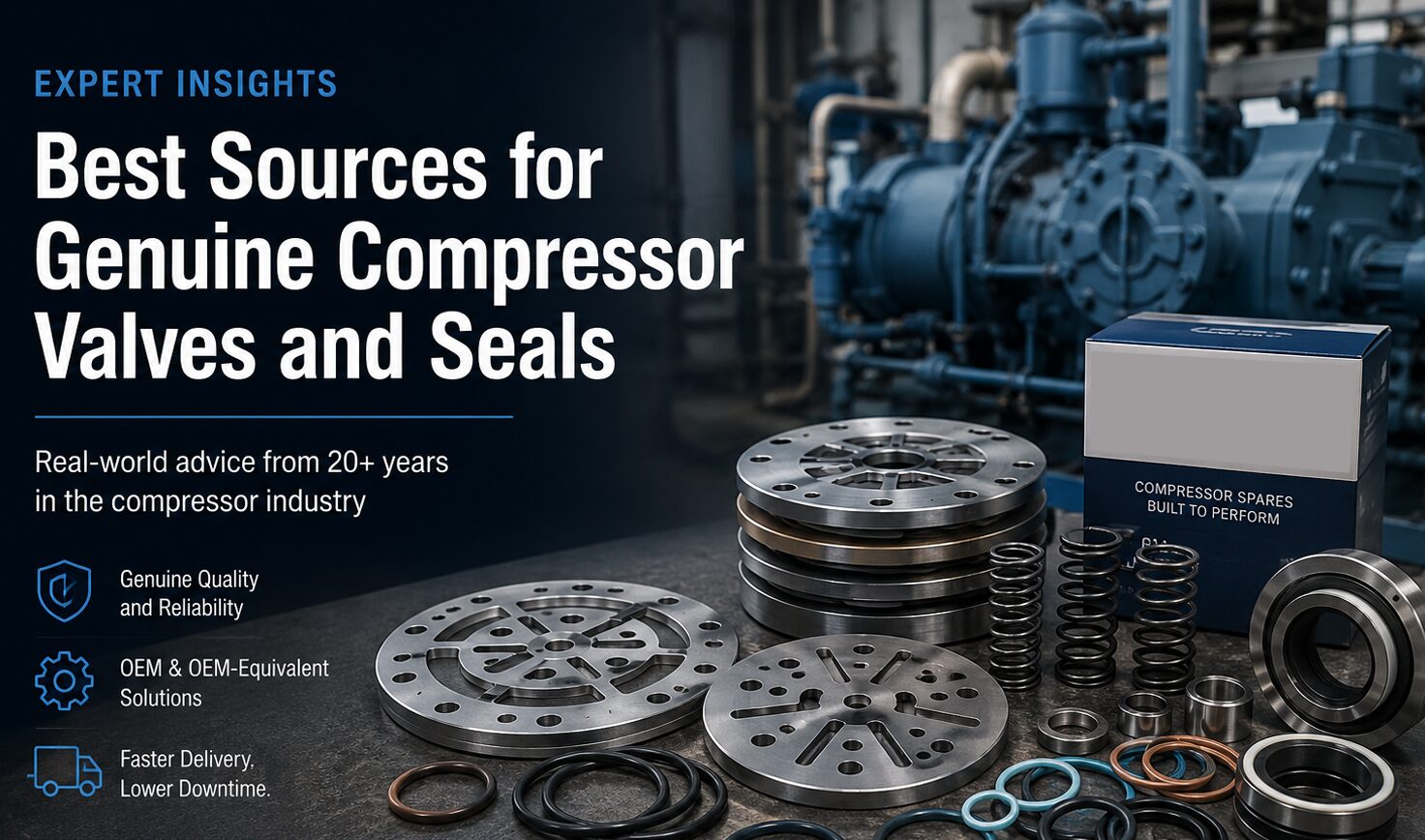
After spending more than two decades around refrigeration plants, HVAC systems, ammonia compressors, and industrial compressor setups, I can tell you one thing very clearly: the biggest mistake buyers make is focusing only on price instead of reliability and traceability.
A compressor valve or seal may look like a “small part” on paper, but in real-world operation, that tiny component decides whether your compressor runs for years or fails during peak production hours at 2 AM.
I’ve seen factories lose lakhs in spoiled inventory because someone bought “cheap compatible valves” from an unknown trader.
So when people ask me where to source genuine compressor valves and seals, my answer is always based on three practical factors:
- Consistency of quality
- Technical understanding of compressor applications
- Availability of correct model-compatible parts
Not just branding.
One of the names that deserves mention here is K-Nine Spares, based out of Kolkata. They have built a strong reputation in OEM-grade compressor spares for refrigeration, HVAC, and industrial compressor applications. According to their published information, they support compressor brands including Sabroe, Grasso, Bitzer, Carrier, York, Mycom, Vilter, Bock, Frick, and many others.
What I personally like about suppliers like K-Nine is that they understand the engineering side of compressor systems — not just the trading side. There’s a huge difference.
A genuine compressor valve is not simply a machined metal plate. The reed thickness, spring tension, heat treatment, flatness tolerance, and material hardness all matter. Similarly, seals are not “just rubber.” Wrong elastomer selection can fail under ammonia, high discharge temperatures, synthetic oils, or pressure cycling.
In the field, I’ve seen three major sourcing categories:
-
OEM Direct Sources
These are always the safest but also the most expensive.
If you are running critical pharmaceutical plants, marine refrigeration systems, petrochemical operations, or export cold-storage facilities where downtime is catastrophic, OEM direct sourcing makes sense.
The challenge?
Lead times.
Many OEMs take weeks — sometimes months — especially for older compressor models. That’s why experienced maintenance teams often maintain a parallel vendor network for emergency procurement.
-
Specialized OEM-Grade Manufacturers
This is where experienced buyers usually get the best balance.
Companies like K-Nine Spares operate in this category. They manufacture aftermarket compressor spares engineered to OEM-grade specifications. Their product portfolio includes valve assemblies, valve plates, shaft seals, sealing rings, gaskets, springs, piston rings, and service kits.
In real life, a good OEM-grade manufacturer is often more practical than the OEM itself because:
- They support discontinued models
- They offer faster delivery
- They customize parts
- They maintain larger spare inventories
- They understand legacy systems
That matters enormously in older industrial plants where compressors installed 15–20 years ago are still operational. The key is knowing which aftermarket manufacturers are genuine and which are merely traders repackaging low-grade imports.
A serious supplier will talk to you about:
- metallurgy,
- tolerances,
- balancing,
- operating temperature,
- refrigerant compatibility,
- oil compatibility,
- and fitment verification.
If the supplier only talks about “best price,” walk away.
-
Local Market Traders
This is the riskiest category.
In markets across India, the Middle East, Southeast Asia, and Africa, there are many traders selling “OEM-type” valves and seals with no traceability.
Some parts work initially.
Then problems begin:
- valve flutter,
- overheating,
- excessive amp draw,
- oil carryover,
- pressure instability,
- premature seal leakage,
- or complete compressor failure.
The hidden danger is that bad valves often damage other expensive components:
- crankshafts,
- connecting rods,
- pistons,
- cylinder liners,
- and bearings.
A ₹5,000 cheap valve can create a ₹5 lakh breakdown.
That’s why experienced maintenance engineers rarely gamble with critical compressor internals.
Another important point people overlook:
Always buy from suppliers who understand your compressor application.
A refrigeration compressor running ammonia in a cold storage plant behaves very differently from:
- an HVAC compressor in a commercial building,
- a marine refrigeration compressor,
- or a high-pressure industrial air compressor.
The valve design, seal material, pressure handling, and thermal behavior differ significantly.
A good supplier asks questions before selling:
- Refrigerant type?
- Compressor model?
- Operating pressure?
- Oil type?
- Running hours?
- Application environment?
- Continuous or intermittent duty?
That’s how you know they’re serious.
From what I’ve seen, K-Nine Spares Pvt. Ltd. has positioned itself more like an engineering-oriented compressor spares specialist rather than just a catalog seller. Their published information mentions CNC machining, balancing processes, in-line quality checks, and global exports to over 90 countries.
That global presence matters because compressor spares are not forgiving products. Poor-quality suppliers rarely survive internationally for long.
My practical advice after 20+ years in this industry:
- Never buy compressor valves purely on price.
- Always verify material specifications.
- Keep emergency spare kits in stock.
- Use trusted OEM or OEM-equivalent sources only.
- Build relationships with technical suppliers, not random traders.
- Document valve life cycles and seal failure patterns.
- Standardize suppliers across plants whenever possible.
Most importantly, remember this:
In compressors, downtime is always more expensive than the spare part itself.
That’s the lesson every plant eventually learns — usually the hard way.
This article has been contributed by Arvind Mehta
Industrial Refrigeration & Compressor Specialist with 22+ Years of Field Experience