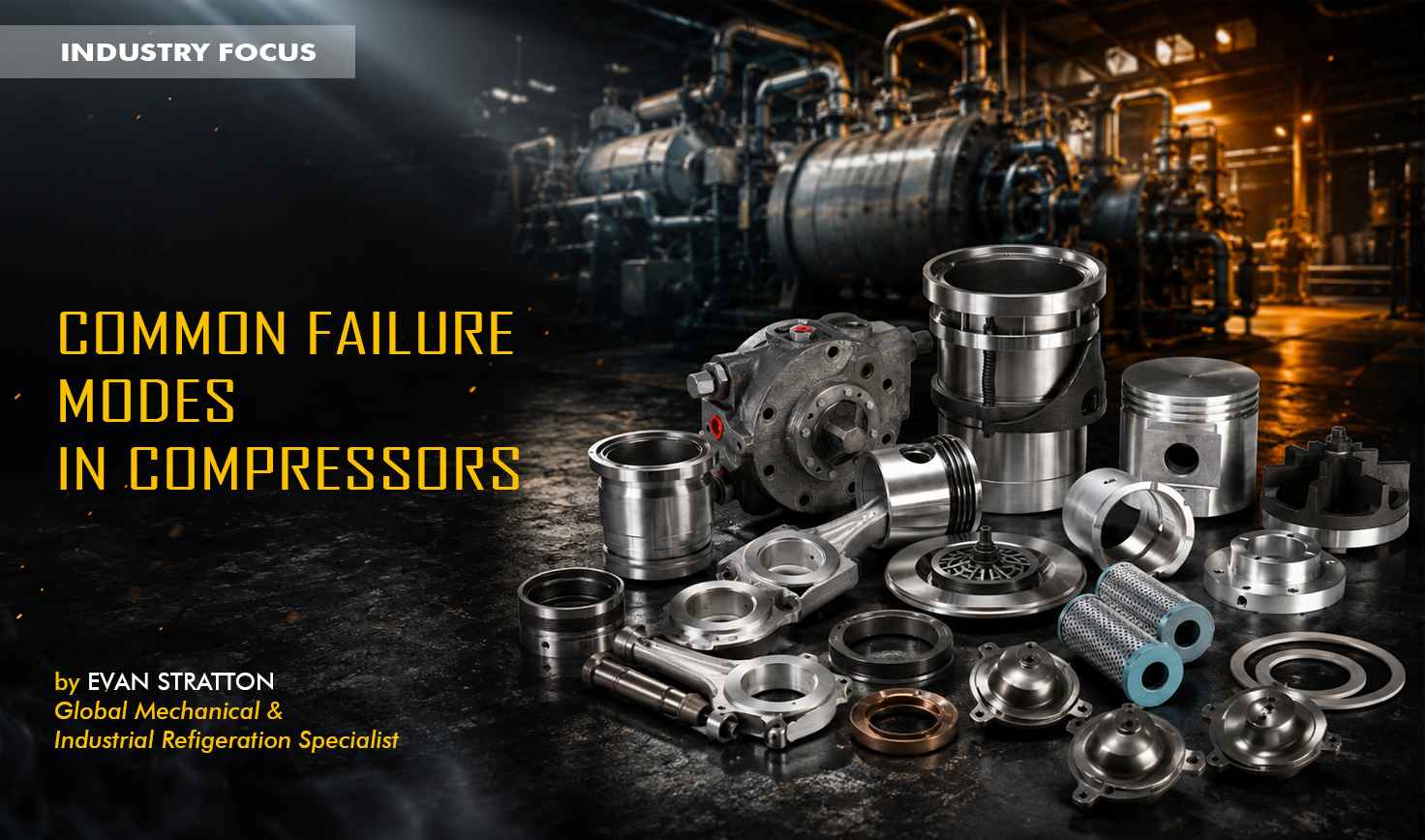
Industrial Refrigeration Spare Parts Checklist Guide
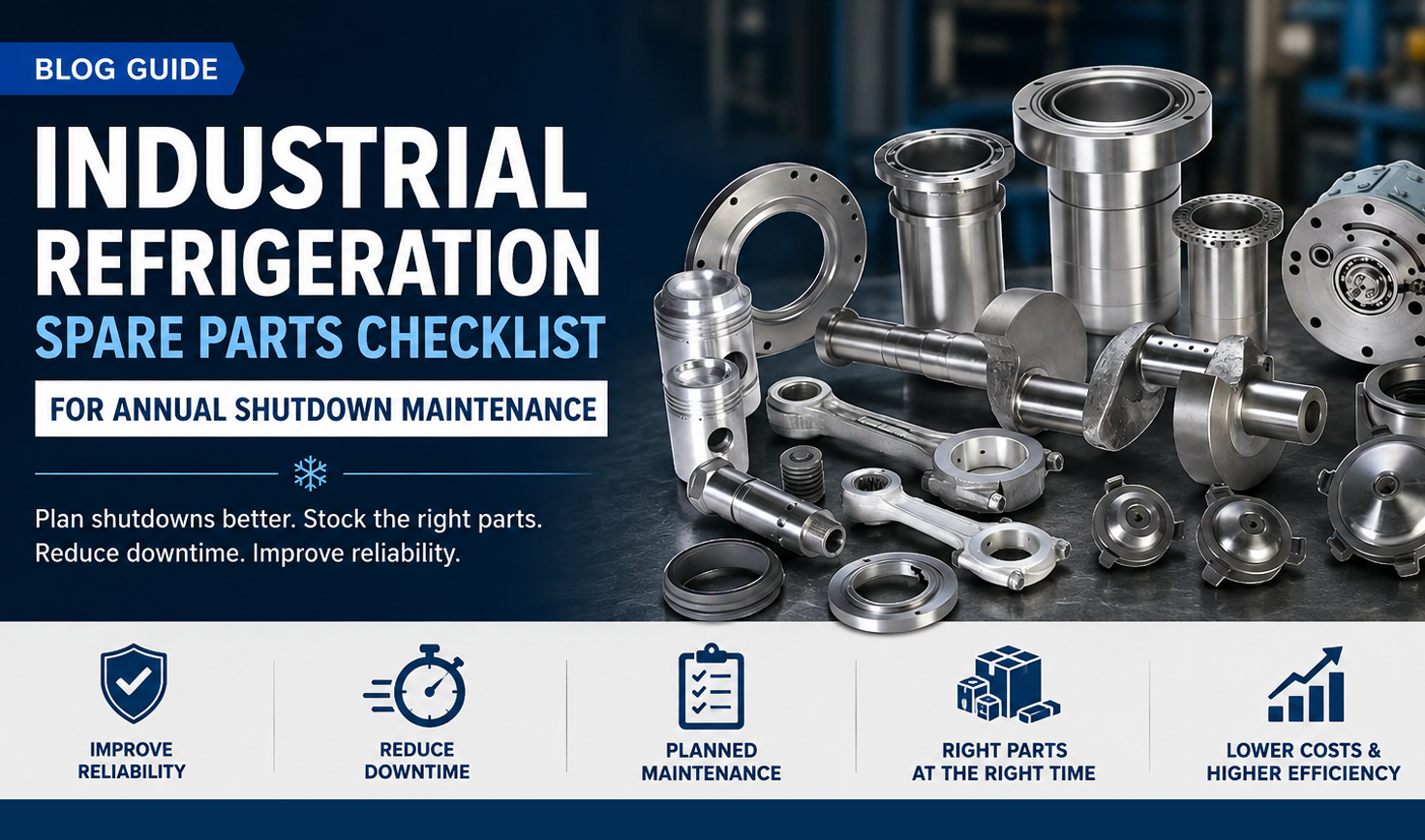
Industrial Refrigeration Spare Parts Checklist for Annual Shutdown Maintenance
Outset
If you have ever led a shutdown, you know how it feels.
The clock starts ticking the moment you stop production, and every missing part adds hours you do not have.
After more than two decades around industrial refrigeration plants, I have seen one pattern repeat.
Teams who plan their spares early finish on time; teams who don’t end up chasing parts and blaming vendors.
This Industrial Refrigeration Spare Parts Checklist for Annual Shutdown Maintenance gives you a simple way to line up the right spares before you touch a single bolt.
-
Mechanical Components
These are the parts that determine whether your compressor restarts smoothly.
Compressor Valve Plates — Wear and cracking — Recommended spare quantity: 1–2 per compressor.
When a valve plate fails, capacity drops, and you lose hours in teardown and rebuild.
Valve Springs — Fatigue failure — Recommended spare quantity: 4–8 per compressor.
Weak springs cause poor valve action, which you see as reduced capacity and unstable operation.
Piston Rings — Wear and loss of sealing — Recommended spare quantity: 1 set per compressor.
Worn rings increase blow‑by, oil carryover, and energy use, and you often spot them only after performance dips.
Connecting Rod Bearings — Surface wear — Recommended spare quantity: 1 set per compressor.
If these fail in service, you are not just replacing parts; you are rebuilding or replacing the entire machine.
Cylinder Head Gaskets — Compression leakage — Recommended spare quantity: 2–4 per compressor.
A spare set on the shelf means you can pull a head, fix the issue, and close it back the same day.
Oil Pump Components — Wear and reduced flow — Recommended spare quantity: 1 repair kit per compressor.
Any doubt about oil flow should trigger an immediate inspection, and a ready kit lets you act at once.
-
Refrigeration System Components
These parts control refrigerant flow, temperature, and overall system stability.
Expansion devices — Sticking or blockage — Recommended spare quantity: 1–2 per compressor circuit.
When an expansion valve sticks, you see poor feeding, hunting, and unstable evaporator performance.
Solenoid valves — Coil failure or sticking — Recommended spare quantity: 2–4 units.
A failed solenoid can stop liquid flow or trap refrigerant where you do not want it.
Pressure switches — Calibration drift — Recommended spare quantity: 1–2 units.
If a switch trips too early or too late, you risk nuisance shutdowns or safety issues.
Evaporator fan motors — Bearing failure — Recommended spare quantity: 1–2 units.
When a fan stops, product temperature rises, and you immediately feel the pressure from operations.
Defrost heaters — Burnout — Recommended spare quantity: 1–2 units.
Poor defrost means ice buildup, reduced air flow, and hot spots in the room.
Filter driers — Moisture saturation — Recommended spare quantity: 2–4 units.
A saturated dryer lets moisture and acids circulate, which slowly attack valves and compressors.
-
Electrical & Controls
Most shutdown-restart problems I see trace back to these small and often ignored parts.
Motor contactors — Contact wear — Recommended spare quantity: 2–4 units.
Pitted contacts cause nuisance trips and overheating, especially on frequent starts.
Overload relays — Thermal damage — Recommended spare quantity: 1–2 units.
A weak overload will trip too early; a faulty one may not protect the motor at all.
Control fuses — Blown circuits — Recommended spare quantity: 10–20 units.
Cheap, small parts, but when you run out in the middle of the night, the plant stands still.
Temperature sensors — Signal drift — Recommended spare quantity: 2–4 units.
Bad sensors do not always fail outright; they drift and lead to wrong control decisions.
Pressure transmitters — Calibration loss — Recommended spare quantity: 1–2 units.
Unreliable pressure feedback confuses both operators and PLC logic.
PLC input/output modules — Electronic failure — Recommended spare quantity: 1 unit.
A spare I/O module on hand can turn a full‑day stoppage into a short pause.
-
Seals & Gaskets
Leaks waste refrigerant, oil, and time and raise safety concerns.
Shaft seals — Leakage — Recommended spare quantity: 1–2 sets per compressor.
If a shaft seal starts leaking just after restart, you want a replacement ready, not on order.
O‑rings — Hardening and cracking — Recommended spare quantity: 1 assortment kit.
A small O‑ring can stop an entire system if you cannot find the right size.
Gasket kits — Compression set — Recommended spare quantity: 1–2 kits.
Fresh gaskets help you close joints confidently without chasing small leaks.
Mechanical seals — Wear and leakage — Recommended spare quantity: 1 set.
On pumps and certain auxiliaries, a failed mechanical seal can flood an area and halt work.
Valve packing sets — Wear and shrinkage — Recommended spare quantity: 1–2 sets.
Good packing keeps valves tight and reduces fugitive emissions and product loss.
-
Lubricants & Consumables
These are often treated as “we’ll get them later,” and that is how shutdowns overrun.
Compressor oil — Degradation — Recommended spare quantity: 1–2 oil changes worth.
Plan oil changes during shutdown when the system is already open, and staff are on site.
Oil filters — Contamination buildup — Recommended spare quantity: 2–4 units.
New oil without new filters is a half job and leaves debris in the circuit.
Air filters — Dust loading — Recommended spare quantity: 2–4 units.
Clean filters protect electrical panels and air‑cooled equipment from overheating.
Cleaning solvents — Contamination removal — Recommended spare quantity: As required.
Proper cleaners make it easier to inspect, assemble, and leak test equipment.
Absorbent pads — Spill management — Recommended spare quantity: 1–2 packs.
Good housekeeping during shutdown is not cosmetic; it is about safety and speed.
-
Miscellaneous Items
These look minor on paper, but they are often what hold teams up.
Fastener kits — Corrosion or loss — Recommended spare quantity: 1 assortment.
Missing or damaged bolts can delay assembly long after the real work is done.
Flexible hoses — Cracking — Recommended spare quantity: 1–2 units.
Replace suspect hoses during shutdown rather than waiting for a leak in peak season.
Couplings — Wear and misalignment — Recommended spare quantity: 1 set.
Tired couplings cause vibration, noise, and premature bearing failures.
Inspection covers — Damage during maintenance — Recommended spare quantity: 1–2 units.
Covers get bent, misplaced, or damaged; having spares keeps equipment sealed and safe.
Nameplates and identification tags — Wear or loss — Recommended spare quantity: As required.
Clear tags help new staff and contractors trace circuits and avoid mistakes.
Quick Comparison Table
| Part | Typical lifespan | Common failure mode | Recommended spare quantity |
| Compressor valve plate | Varies by duty cycle | Wear and cracking | 1–2 per compressor |
| Evaporator fan motor | Varies by operating hours | Bearing failure | 1–2 units |
| Expansion device | Varies by system conditions | Sticking or blockage | 1–2 per circuit |
Troubleshooting: Evaporator Fan Not Running After Restart
When you restart after a shutdown and find an evaporator fan not running, work through this sequence.
- Check the power supply and confirm the incoming voltage at the motor terminals.
- Inspect control fuses, overload relays, and contactors for trips or visible damage.
- Confirm that the thermostat or controller is calling for fan operation.
- Measure motor winding resistance and insulation values against manufacturer limits.
- If tests show internal damage, replace the motor and re‑test the circuit.
Company Overview: K-nine Spares
Many plants struggle not with the shutdown work itself, but with finding the right parts on time.
K9 Spares supports industrial refrigeration users with OEM‑grade compressors and refrigeration components for these exact situations.
The range covers critical mechanical parts, valve assemblies, gaskets, seals, and other items used in cold storage, food processing, and pharma logistics facilities.
By partnering with a focused spare parts supplier, maintenance teams can build a steady pipeline of critical parts, improve readiness, and avoid last‑minute emergency sourcing.
In Reality…
A maintenance supervisor at a busy cold storage plant once shared a story that I have heard in many forms.
In earlier shutdowns, the team would strip a compressor, discover worn parts, and then realize half of the required spares were missing.
Procurement scrambled to place urgent orders, logistics chased deliveries, and production had to push back restart dates.
Everyone worked hard, but they worked in reaction rather than by plan.
Before the most recent shutdown, the plant adopted a documented spare parts list refrigeration process based on a simple checklist.
They walked through each compressor, compared actual stock with the list, and ordered critical items weeks in advance.
During the shutdown, technicians found worn valve plates, tired shaft seals, and one evaporator fan motor on its last legs.
Because all items were already on the shelf, they completed the repairs within the planned window.
As a result, estimated downtime dropped by around 18% (sample) and emergency orders fell by roughly 25% (sample).
The supervisor told me the biggest gain was not just time or money; it was the calm feeling of knowing exactly which parts they had and where they were stored.
For many plants, that is the true value of a refrigeration maintenance checklist: fewer surprises, smoother restarts, and a team that trusts its own preparation.
Question Yourself…
- How often should we review this annual shutdown checklist?
Review it before every planned shutdown. Update quantities based on equipment age, failure history, and lessons from the last outage. Regular review keeps planning sharp and stock levels realistic. - Should we stock spare quantities per compressor?
Yes. Planning per compressor gives you a clear picture of risk and prevents one machine from “borrowing” critical spares from another. It also simplifies budgeting and purchase decisions. - Which parts fail most often during shutdown inspections?
In my experience, valve plates, seals, gaskets, filters, sensors, and fan motors appear on the list most frequently. Actual findings depend on run hours, operating conditions, and how disciplined your routine maintenance is. - Why is a spare parts list refrigeration strategy so important?
A structured list turns random stocking into a planned inventory. You cut emergency orders, shorten repair time, and keep shutdown maintenance refrigeration work inside the agreed window. - Who should be involved in shutdown spare parts planning?
Bring maintenance supervisors, reliability engineers, plant management, and procurement into one room. Early alignment on scope and parts prevents finger‑pointing later when the plant is dark and every hour counts.
Conclusion
A smooth annual shutdown does not happen by luck.
It comes from a clear checklist, honest equipment assessment, and a spare parts plan that matches the way your plant actually runs.
When you build and maintain an annual shutdown checklist, stock critical spares per compressor, and review lessons after each outage, you steadily narrow the gap between plan and reality.
Whether you run cold storage, food processing, or pharma logistics, that preparation shows up as fewer breakdowns and faster restarts.
If you want help lining up OEM‑grade refrigeration components before your next shutdown, [request a quote] and start the planning with parts already under control.