Top Compressor Spare Parts & Why They Fail
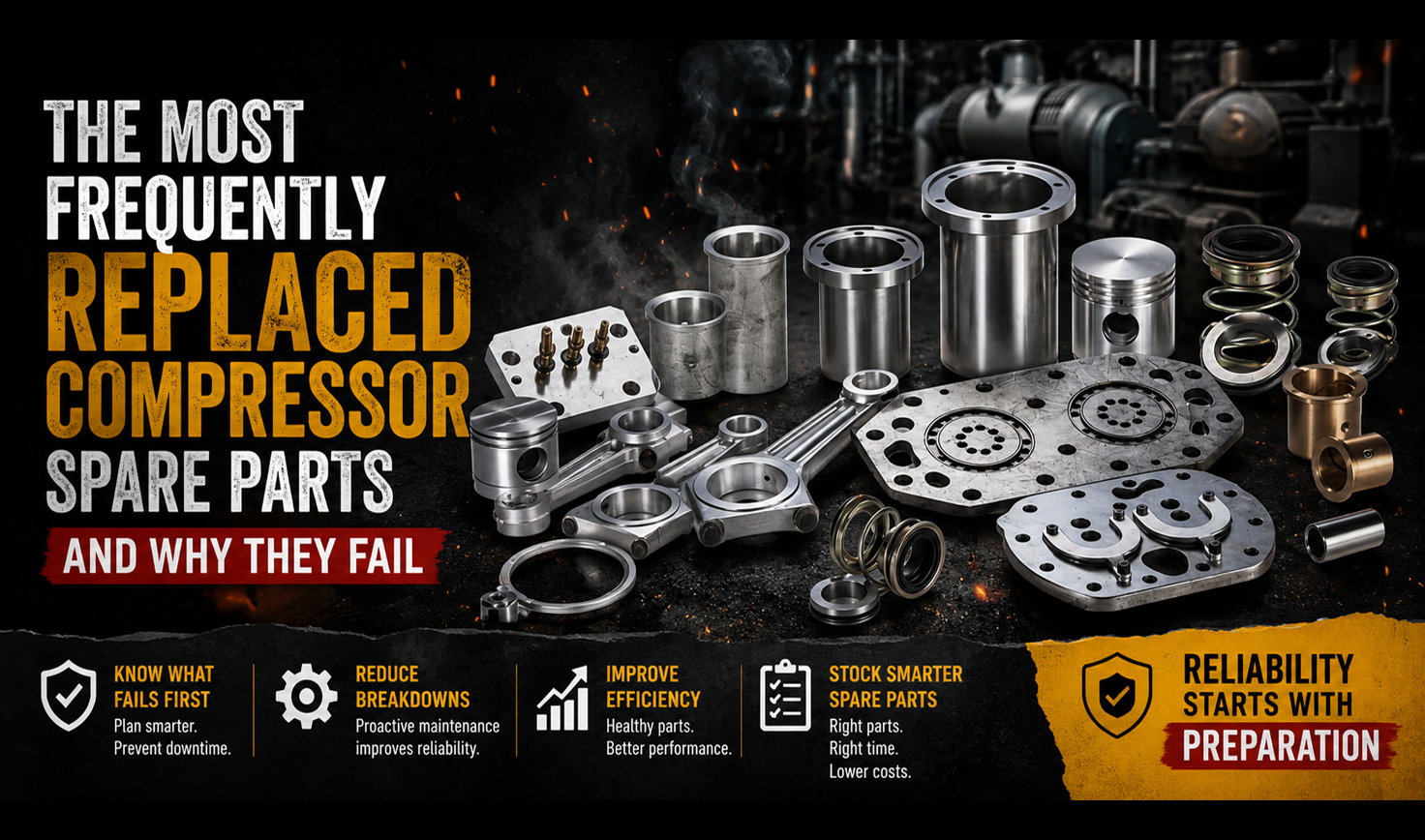
The Most Frequently Replaced Compressor Spare Parts and Why They Fail
Every plant manager knows the sudden chill of unexpected downtime. In industrial refrigeration, a failing compressor can ruin an entire batch. Food processing stops. Pharmaceutical logistics stall. Profits melt away fast. Got it? This is why proactive maintenance matters.
Maintaining these machines requires a clear, strategic roadmap. You must know what breaks and exactly why. Let us look at the most frequently replaced compressor spare parts and why they fail. We will help you spot issues before they stop your critical lines.
The Critical Vital Components: Parts That Wear Out First
Industrial compressors operate under intense mechanical stress. Certain components bear the heaviest operating load. Here are the most vulnerable parts in your system.
-
Shaft Seals: The First Line of Defence
Shaft seals keep refrigerant in and contaminants completely out. Yet, they top the list of frequent replacements.
Why do they fail?
- Lack of lubrication: Dry running destroys delicate seal faces quickly.
- Alignment issues: Tiny misalignments cause highly uneven wear patterns.
- Debris: Microscopic metal particles score the smooth seal surfaces.
Check your oil levels daily. Ensure perfect coupling alignment during every single maintenance cycle. This simple habit saves thousands in repair bills.
-
Valve Plates and Reed Valves
Valves flex thousands of times every single operating hour. They endure incredible fatigue.
Why do they fail?
- Liquid slugging: Liquid refrigerant enters the suction chamber.
- Overheating: High discharge temperatures weaken the valve metal.
When a valve fails, your system efficiency plummets immediately. Your compressor works twice as hard. This triggers a dangerous, expensive domino effect.
-
Piston Rings and Connecting Rods
Piston rings handle the physical heavy lifting every day. They demand a continuous, clean oil film to survive.
Why do they fail?
- Oil dilution: Liquid refrigerant mixes into the crankcase oil.
- Contaminated lubricant: Dirty oil acts like sandpaper on metal.
Are you tracking your oil quality regularly? You should be. Clean oil protects these critical internal components from severe wear.
-
Gaskets and O-Rings
Elastomer components seal the tight joints between major compressor sections. They prevent refrigerant leaks.
Why do they fail?
- Chemical incompatibility: Wrong oil choices degrade the rubber compound.
- Thermal cycling: Extreme temperature swings cause material shrinkage.
A brittle gasket leads to dangerous pressure losses. Always choose OEM-grade materials for replacements.
-
Crankcase Heaters
These heaters keep refrigerant from condensing in the oil during shutdown. They ensure safe startups.
Why do they fail?
- Electrical surges: Voltage spikes burn out the heating element.
- Continuous operation: Faulty control relays keep them on constantly.
Cold starts with diluted oil destroy bearings instantly. Never ignore a dead heater.
Why Do These Parts Fail? The Root Causes
Parts do not just die of old age. Premature failure usually stems from specific system issues. Let us break down the main culprits.
Moisture and System Contamination
Moisture is the ultimate enemy of industrial refrigeration systems. Water reacts with oil to create harmful, corrosive acids. These acids eat away at internal components silently.
Where does it come from? Poor evacuation during servicing is a common cause. Air enters during pipe repairs. Always use high-quality filter driers. Replace them regularly to trap moisture effectively.
Inadequate or Incorrect Lubrication
Oil does far more than reduce physical friction. It also cools hot internal parts. Using the wrong oil grade ruins necessary viscosity.
Furthermore, high temperatures cause oil to break down fast. This creates thick, sticky sludge. Sludge blocks narrow internal oil passages. Soon, your bearings seize up completely.
High Operating Temperatures
Excessive heat bakes your compressor from the inside out. It alters tight clearances. It warps vital valves.
What causes high heat? Dirty condenser coils are often to blame. Low refrigerant charges also raise operating temperatures. Keep your coils clean. Monitor your system pressures closely.
Liquid Slugging Damage
Compressors are designed to compress gas, not liquid. Liquid refrigerant cannot be compressed.
When liquid enters the cylinder, pressure spikes instantly. This catastrophic force breaks valves, rods, and pistons. Correct expansion valve settings prevent this nightmare.
Proactive Sourcing: Smarter Inventory Strategies
Waiting for a failure to order parts is highly risky. Supply chain delays extend downtime from hours to weeks.
Smart managers keep critical spares right on hand. Focus on seals, gaskets, and valve kits. For fast access to reliable components, many teams rely on specialized distributors. For instance, www.k9spares.com provides a dependable platform for sourcing high-quality industrial refrigeration parts quickly. Having a trusted partner ensures you get the right parts when pressure mounts. This keeps production moving forward safely.
Your Preventative Maintenance Checklist
Use this quick checklist to protect your frequently replaced compressor spare parts.
Daily Maintenance Tasks
- Check oil levels via the sight glass.
- Verify the correct oil color and clarity.
- Listen for unusual mechanical knocks or clicks.
- Log suction and discharge pressures accurately.
Weekly Maintenance Tasks
- Inspect shaft seals for visible oil leaks.
- Check the oil crankcase heater operation.
- Clean ambient dirt from the compressor body.
- Verify suction superheat temperatures remain steady.
Monthly Maintenance Tasks
- Test compressor oil for acid content.
- Check belt tension or coupling alignment.
- Inspect electrical connections for signs of overheating.
- Review vibration analysis reports for early warnings.
Real-World Case Study: Turning Maintenance Around
A large midwestern food processing plant faced frequent unscheduled shutdowns. Their primary ammonia compressor kept leaking at the shaft seal. Each failure costs thousands in lost production and emergency labor.
The maintenance supervisor implemented this exact checklist. They focused heavily on oil quality and alignment checks. They also partnered with a dedicated supplier to stock critical valve plates and seals ahead of time.
| Metric | Before Strategy | After Strategy |
| Annual Seal Failures | 5 per year | 1 per year |
| Emergency Downtime | 42 hours | 4 hours |
| Urgent Shipping Costs | $3,500 | $0 |
The results were immediate and measurable. Over twelve months, unexpected compressor downtime dropped by 90%. Total maintenance costs decreased by 35%. The plant met its production targets without a single emergency rush. This is why it matters. [Note: This is a sample case study based on typical industrial refrigeration outcomes.]
Deep Dive: How to Analyze Part Wear
Do not just throw broken parts into the trash. Inspect them closely. They tell a clear story about your system.
Inspecting Valve Failures
Look at the broken valve pieces under bright light. Are there copper plating marks? This indicates high moisture levels. Is the metal scored? This means solid debris is floating inside.
Evaluating Bearing Wear
Look at the sleeve bearings. Is the lining wiped out on one side? That indicates severe shaft misalignment. Are there deep scratches? Contaminated oil is the primary cause.
You Asked For It!
How often should I replace shaft seals?
Inspect them weekly for oil traces. Replace them immediately if you detect a leak or during major overhauls.
What causes liquid slugging in compressors?
It happens when liquid refrigerant returns to the compressor. This is usually due to faulty expansion valves or low load.
Can I mix different compressor oil brands?
No. Never mix different brands or types. It can cause chemical reactions, oil separation, and component failure.
How do I know if a valve is failing?
Look for a drop in capacity. Higher-than-normal discharge temperatures also indicate a leaking valve.
Why does oil turn black in a compressor?
Black oil indicates severe overheating or heavy contamination. Change the oil and find the heat source immediately.
Conclusion
Unplanned downtime does not have to be your norm.
By understanding the most frequently replaced compressor spare parts and why they fail, you can take total control of your facility. Implement a strict maintenance schedule. Keep your essential spares fully stocked.
Ready to secure your operations and eliminate emergency shipping fees? Visit us to get a quote, an expert assessment, and stock up on critical parts.